
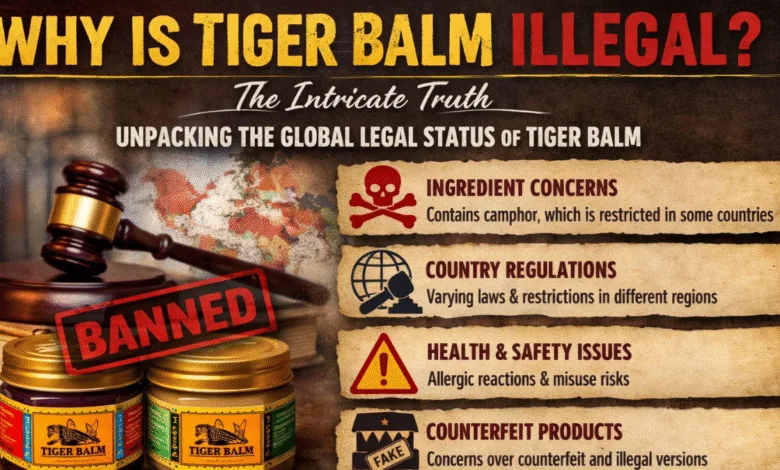

Why is tiger balm illegal? This question pops up online again and again, often wrapped in rumors, half-truths, and confusing headlines. Tiger Balm is a famous herbal ointment used for sore muscles, headaches, and minor aches. Many people have grown up seeing it in medicine cabinets. So when someone hears that it might be “illegal,” it can feel shocking.
Let’s slow down, take a breath, and unpack the facts. This article explains why is tiger balm illegal in some places, why it’s perfectly legal in many others, and what rules actually matter. We’ll keep the language clear, the tone calm, and the information accurate—no scare tactics, no drama. By the end, you’ll understand the laws, the ingredients, and the safety reasons behind them, and you’ll know how to use Tiger Balm responsibly where it’s allowed.
Why Is Tiger Balm Illegal? Understanding the Confusion First
Before diving into laws and ingredients, it’s important to clear up a big misunderstanding.
Tiger Balm is not illegal everywhere. In fact, it’s legal and widely sold in many countries, including the United States, the United Kingdom, Singapore, Hong Kong, and much of Asia. So why do people ask, why is tiger balm illegal?
The confusion usually comes from:
- Different formulas sold in different regions
- Ingredient limits set by health authorities
- Import and labeling laws
- Old versions of the product that are no longer allowed
In short, Tiger Balm itself isn’t the villain. Regulations vary, and that’s where the story gets interesting.
What Is Tiger Balm and Why Do People Use It?
Tiger Balm is a topical ointment, meaning it’s applied to the skin, not swallowed. It was developed in the late 1800s and became popular for its cooling and warming effects.
People commonly use Tiger Balm for:
- Muscle aches and stiffness
- Joint pain
- Tension headaches
- Back pain
- Cold and flu discomfort (like chest rubs)
It works by creating a warming or cooling sensation that distracts the brain from pain. Think of it as a helpful nudge rather than a cure-all.
Why Is Tiger Balm Illegal in Some Countries but Legal in Others?
This is the heart of the matter. Why is tiger balm illegal in certain places while it’s sold freely elsewhere?
The answer lies in regulatory rules, not in a global ban.
Different countries have different:
- Safety standards
- Ingredient limits
- Approval processes for herbal products
If a product doesn’t meet a country’s rules, it may be restricted, reformulated, or temporarily banned—even if it’s safe when used correctly.
Ingredients at the Center of the Debate
Let’s talk ingredients, because this is where most legal issues begin.
Traditional Tiger Balm formulas may include:
- Camphor
- Menthol
- Cajuput oil
- Clove oil
- Cassia oil
These are natural or plant-based, but “natural” doesn’t always mean “unregulated.”
Camphor: The Main Reason Laws Step In
Camphor is often the key reason people ask why is tiger balm illegal.
Some countries limit camphor because:
- High amounts can be harmful if misused
- It can be dangerous if swallowed
- Children are more sensitive to it
Because of this, governments may:
- Limit how much camphor is allowed
- Require special labels
- Ban older, stronger formulas
Modern Tiger Balm products usually follow these rules carefully.
Why Is Tiger Balm Illegal for Import in Certain Regions?
Sometimes, the product itself is legal—but importing it isn’t. That sounds odd, right? Yet it happens.
Import restrictions may apply when:
- Labels aren’t in the local language
- Ingredients aren’t listed clearly
- The formula doesn’t match local standards
- The product lacks official approval
So when someone says Tiger Balm is “illegal,” they may really mean:
- That specific version
- That specific shipment
- That specific seller
Context matters. A lot.
Old vs. New Formulas: What Changed Over Time?
Another reason the question why is tiger balm illegal keeps coming up is that older formulas were stronger.
Years ago:
- Ingredient limits were looser
- Safety research was still growing
- Labels were less detailed
Today:
- Formulas are adjusted to meet laws
- Packaging includes warnings
- Child-safety standards are stricter
If you hear about a ban, it’s often about an older version, not the current one on store shelves.
Is Tiger Balm Safe When Used Correctly?
This is a fair and important question.
When used as directed, Tiger Balm is generally considered safe for most people. Problems usually happen when:
- It’s used too often
- Applied on broken skin
- Used on very young children
- Accidentally swallowed
That’s why regulations exist—not to scare users, but to protect public health.
Why Is Tiger Balm Illegal for Children in Some Places?
Some countries restrict Tiger Balm use for children under a certain age. This adds to the confusion about why is tiger balm illegal.
Reasons include:
- Children have thinner skin
- Strong ingredients absorb faster
- Risk of accidental ingestion
Because of this, labels may say:
- “Not for children under X years”
- “Use with adult supervision”
These aren’t bans. They’re precautions.
Legal Status Around the World: A Simple Overview
Here’s a helpful table to make things clearer:
| Region | Legal Status | Notes |
|---|---|---|
| United States | Legal | Regulated as an OTC topical product |
| United Kingdom | Legal | Must meet ingredient limits |
| Singapore | Legal | Country of origin |
| Canada | Restricted | Only approved formulas allowed |
| Australia | Regulated | Import rules apply |
| Some EU Countries | Varies | Depends on local health laws |
As you can see, there’s no one-size-fits-all answer to why is tiger balm illegal.
Why Is Tiger Balm Illegal Online Sometimes?
You may notice that some online stores won’t ship Tiger Balm to certain locations. That can feel suspicious.
But usually, it’s because:
- Sellers avoid legal risks
- Shipping rules are complex
- Platforms follow strict compliance policies
It’s often easier for a seller to say “we can’t ship there” than to explain every regulation.
Myths and Misinformation About Tiger Balm
Let’s bust a few common myths.
- Myth: Tiger Balm is banned everywhere
- Truth: It’s legal in many countries
- Myth: It contains illegal drugs
- Truth: It contains regulated herbal ingredients
- Myth: It’s unsafe for everyone
- Truth: It’s safe when used correctly
Misinformation spreads fast, especially online. That’s why trusted sources matter.
How Authorities Decide What’s Legal or Illegal
Health authorities don’t act on rumors. They rely on:
- Scientific studies
- Reported side effects
- Usage data
- Public safety standards
If a product raises concerns, they may:
- Ask for reformulation
- Add warning labels
- Limit sales instead of banning
So when people ask why is tiger balm illegal, the honest answer is often: it’s regulated, not rejected.
Alternatives When Tiger Balm Isn’t Allowed
If Tiger Balm isn’t available where you live, there are usually alternatives:
- Menthol-based creams
- Herbal muscle rubs
- Heat or cold patches
These options exist because the goal is relief, not restriction.
Why Is Tiger Balm Illegal? The Role of Trust and Transparency
Trust is built when companies:
- List ingredients clearly
- Follow local laws
- Update formulas responsibly
Tiger Balm has stayed popular for over a century because it adapts. That adaptability helps explain why it remains legal in many places today.
What Consumers Should Know Before Buying
If you’re thinking about buying Tiger Balm:
- Check local regulations
- Buy from trusted sellers
- Read labels carefully
- Follow usage instructions
Being informed keeps you safe and confident.
The Big Picture: Regulation Isn’t the Enemy
It’s tempting to see laws as roadblocks. But in reality, regulations exist to:
- Protect users
- Prevent misuse
- Ensure quality
That’s a good thing. It’s not about fear—it’s about care.
Why Is Tiger Balm Illegal? A Calm and Clear Conclusion
So, why is tiger balm illegal in some places? The answer isn’t shocking or scary. It comes down to ingredient limits, safety standards, and local laws. Tiger Balm isn’t globally banned. It’s carefully regulated, sometimes restricted, and often reformulated to meet modern health rules.
When you hear claims about it being illegal, look closer. Ask where, which version, and why. Knowledge clears confusion every time.
In the end, understanding why is tiger balm illegal helps us see the bigger picture: responsible regulation, informed consumers, and a product that continues to evolve with trust, care, and transparency.
